- Kindred
- Posts
- How to Tell Your Story (Part 1)
How to Tell Your Story (Part 1)
Y...is for telling YOUR story

Eric Jeng
February 03, 2026
In this two-part “How to Tell Your Story” series, I’ll teach you how to tell your story - but first, I’ll demonstrate by telling you MY story of how I started making videos.
Every story starts with a dream.
Mine started at nine, sitting in my living room with my family, watching Michelle Kwan glide across the TV at the 1996 World Championships, announcing to everyone - with full certainty - that I was going to be an Olympic gold figure skater.
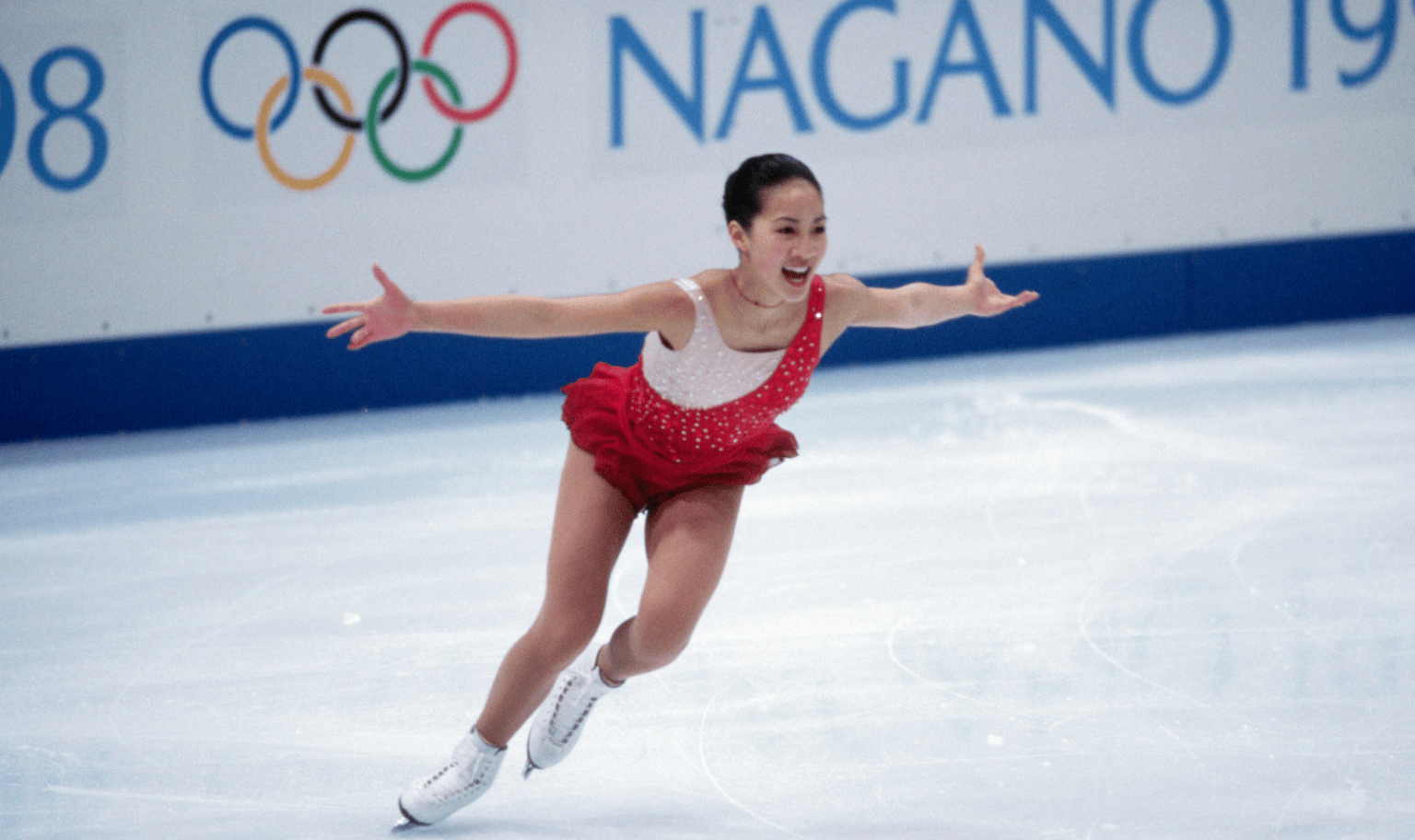
She was my childhood hero.
A week later I stepped onto the ice and faceplanted. Then I faceplanted again. I remember being shocked by how little balance I actually had. I cried all the way home, crawled into bed, and hid under a blanket, crushed by how quickly my dreams slipped out from under me.
Looking back, it wasn’t about skating. It was my first taste of a pattern I’d repeat for years: the moment aliveness meets embarrassment, safety starts whispering, don’t try.
You see, even as a kid, I had two strong pulls in me.
One toward aliveness - adventure, creativity, curiosity for its own sake.
The other toward safety - approval, doing life “right,” not failing, not losing face.
Coming from an immigrant family, safety and security weren’t abstract ideas. They were the air we breathed: get into a good college, get a good job, make good money… or you’re screwed. School turned into a scoreboard, and I learned how to win.
By high school I was a machine: academics, extracurriculars, applications. It worked. When I got into a good college I felt the relief in my body, like I could finally exhale. Like I could point to something and say, see? I’m fine, I’m safe, I’m enough.
Then, something in me nudged: make a music video.
YouTube was young, I loved the process, and I poured myself into it - obsessing over tiny cuts like every frame mattered, getting friends to help me film, re-editing until it felt right. It was a music video to Maroon 5’s “She Will Be Loved,” you can watch it below. (Don’t forget to come back to my story please)
For the first time in a while, I felt absorbed in something that wasn’t about being impressive. For a moment I wondered if I should study film.
But the safe voice showed up instantly: too risky. Just a hobby.
So on paper, life kept working. Inside, the tension didn’t go away. There was this quiet sense that I was building competence, but not myself – choosing safety and status over what actually made me feel alive.
After graduation, I went into finance. It looked respectable, and I wanted it to fit. But inside I felt hollow, like whole rooms of my personality had been sealed off.
Six months into my first job, I remember stepping out into a parking lot and calling my girlfriend. I told her I wasn’t happy - not “work is hard” unhappy, but like something in me was dying. Like I was becoming someone I didn’t recognize.
Still, I kept going. I kept believing there was a version of the path that would finally fit if I just leveled up: more money, more prestige, a better role.
That’s why I applied to business school. I wanted options, but more than that, I wanted the stamp - proof I could point to and say: I’m legitimate.
And when I got in, I felt the familiar rush of relief. Okay. I can breathe.
Right before starting, the nudge returned: take a filmmaking class.
I had this sense it might be my last real chance to explore that side of me. So I enrolled in a filmmaking course. And by the end we made a short film, something opened in me - writing, directing, editing, shaping emotion into a sequence of shots. I couldn’t believe people got paid to make movies.
For a moment, I considered walking away from business school.
But I didn’t. It felt too risky, too unclear, too late.
Once I started, it was obvious I didn’t belong. My classmates lit up debating markets, recruiting strategies and which firms they were targeting. I nodded along, laughed at the right moments, and later felt that same hollowness - like I was performing a life instead of living one.
Every day I walked past a sign that read:

It felt like the building was asking me the question I was terrified to answer.
I didn’t have the internal grounding to sit in not knowing, so I coped. I numbed. I started smoking at night because it was the easiest way to make the questions go quiet. The worst part wasn’t even the coping - it was the secrecy. I loved my girlfriend, but I became harder to reach. I was carrying fear and confusion and shame, and instead of being honest, I shut down.
Eventually the relationship ended. Seven years, my first love. The most painful experience of my life, and the first time I realized that my actions had consequences.
After graduation, I moved back home and returned to finance. Without school to distract me, everything hit at once. I’d chased security and validation for years, and I was back where I started - living with my parents, doing work I didn’t love, carrying a breakup I hadn’t processed.
One cold Bay Area morning, I stepped out of the shower and didn’t have it in me to get dressed. I crawled into my childhood bed, pulled the blanket over my head, and just lay there. No tears. No deep breaths. Just silence.
That was the lowest point of my life. And it was also the turning point, because it finally made me willing to change.
First, I came back to my faith. I needed an anchor when everything felt bleak.
Then, I started therapy and worked with a coach.
I started journaling like my life depended on it - not pretty journaling, but truth journaling. The kind where you’re just trying to tell the truth on paper because you can’t keep carrying it in your body.
I began learning how to sit with discomfort instead of avoiding it.
Eventually, I moved to New York for space and independence. I had this sense that if any city could help me find myself, it was New York.
I was right, but it wasn’t easy.
New York became my training ground. I joined a church, took improv and dance classes, said yes to things that made me come alive and stretched me at the same time. I started talking to people- not networking, just listening.
Slowly, the imaginary scoreboard lost its grip. I realized I cared more about connection than approval. My life started to feel like it had a plot again, even if I didn’t know the full map.
Then COVID hit.
The city went quiet. Sirens. Empty subways. My job disappeared. And in that stillness, all the status stuff that used to feel heavy just evaporated.
And the nudge returned again: start a YouTube channel.
So I did.
The early videos barely got views. It was strangely vulnerable to put yourself online and meet silence - like you’re saying “this is me,” and the world just shrugs. But I loved making them, and by then I’d lived enough life to trust I’d be okay even if nobody cared at first.
I kept going. And almost naturally, the strangers came back.
I started walking up to people with a camera and asking the kinds of questions I’d always wanted to ask. And something clicked. Improv taught me presence. Therapy taught me truth. Suffering gave me compassion.
The camera didn’t create something brand new - it gave shape to something that had been forming for years.
Then one morning, I woke up and saw it: a video I’d posted the day before had exploded. Millions of views overnight. It was a cheeky old British man, and I remember staring at my phone, half groggy, half laughing.

Of all videos, it was this one? :D
It was surreal - but I wasn’t completely surprised. Not because I expected it to go viral, but because I could feel the convergence. When you’re on your path, you start to trust that things will work out somehow.
And that’s it - it took about 35 years, but that’s how I started making videos. Not as a sudden reinvention, but as a long convergence: a kid pulled toward aliveness, a teenager trained to chase safety, a young man who went numb trying to be respectable, a breaking point, a rebuilding - and then a camera.
Writing my story out wasn’t easy. It took a lot of rewrites to get closer to the truth - and I still don’t think I’m fully there. But it’s close enough.
And it was deeply rewarding. It helped me see the patterns of my life more clearly, strip away the noise, and name the themes that have been there all along. In a quiet way, it also helped me make peace with my past - and feel more hope for the future.
In next week’s article, I’ll walk you through the steps I used to write my story, so you can do it too.
I’ll also be announcing a new project I’m launching in 2026, aimed at helping people tell their stories - so keep an eye out for that.
Thanks for reading.
With curiosity,
Eric
If this article was helpful consider forwarding it to a friend. If you haven’t subscribed yet, click the button below to subscribe and never miss out on more articles: